Carbonyl Compounds;Chemical Synthesis;FINE Chemical & INTERMEDIATES;BUILDING BLOCKS;Aromatics;Organic Building Blocks;Benzaldehyde;Adehydes, Acetals & Ketones;Anisoles, Alkyloxy Compounds & Phenylacetates;Aldehydes;C9;Carbonyl Compounds;93-02-7
Mol File:
93-02-7.mol
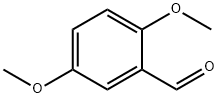
2,5-Dimethoxybenzaldehyde Chemical Properties
Melting point
46-48 °C (lit.)
Boiling point
146 °C/10 mmHg (lit.)
density
1.1708 (rough estimate)
refractive index
1.5260 (estimate)
Fp
>230 °F
storage temp.
Keep in dark place,Sealed in dry,Room Temperature
solubility
795mg/l
form
Crystalline Powder, Crystals and/or Chunks
color
Yellow to beige
Water Solubility
Soluble in chloroform and methanol. Slightly soluble in water.
Sensitive
Air Sensitive
BRN
509301
InChIKey
AFUKNJHPZAVHGQ-UHFFFAOYSA-N
LogP
1.910
CAS DataBase Reference
93-02-7(CAS DataBase Reference)
NIST Chemistry Reference
Benzaldehyde, 2,5-dimethoxy-(93-02-7)
EPA Substance Registry System
Benzaldehyde, 2,5-dimethoxy- (93-02-7)
Safety Information
Hazard Codes
Xi
Risk Statements
36/37/38-43
Safety Statements
26-36/37/39-24/25-36
WGK Germany
2
RTECS
CU5740500
Hazard Note
Irritant
TSCA
Yes
HS Code
29124900
MSDS Information
Provider
Language
2,5-Dimethoxybenzaldehyde
English
SigmaAldrich
English
ACROS
English
ALFA
English
2,5-Dimethoxybenzaldehyde Usage And Synthesis
Chemical Properties
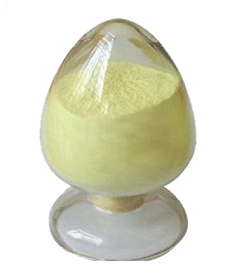
yellow crystalline solid
Uses
2,5-Dimethoxybenzaldehyde is used in the preparation of 2,5-dimethoxyphenethylamine, which is utilized to prepare psychoactive drugs such as 2,5-dimethoxy-4-bromophenethylamine, 2,5-dimethoxy-4-iodophenethylamine and 4-Chloro-2,5-dimethoxy-phenethylamine. It acts as an intermediate in organic synthesis.
Application
2,5-Dimethoxybenzaldehyde, also known as 2C-H, is an organic compound and a benzaldehyde derivative. It can be used to produce 2,5-dimethoxyphenethylamine. 2C-H is also used to produce many other substituted phenethylamines such as 2C-B, 2C-I and 2C-C.
Preparation
2,5-Dimethoxybenzaldehyde synthesis: Anethole is oxidized to anisaldehyde , which after isolation is subjected to a BaeyerVilliger oxidation reaction with performic or peracetic acid. The O-formyl-4-methoxyphenol obtained this way is hydrolyzed . 4-Methoxyphenol is subsequently formylated using the Reimer-Tiemann method and the obtained 2-hydroxy-5-methoxybenzaldehyde is methylated with dimethylsulfate to 2,5-dimethoxybenzaldehyde.
Reaction
A : Anisaldehyde from anethole via oxidative cleavage: 20 g anise oil was suspended in a mixture of 150 mL water and 30 mL conc. sulfuric acid; addition of 55 g sodium bichromate at such a rate that the temperature did not exceed 40°C. The reaction mixture was extracted with 4 x 125 mL toluene and the solvent evaporated. The residual oil was vacuum distilled to yield 9.1 g anisaldehyde.
B : O-formyl-4-methoxyphenol: 6 mL anisaldehyde was dissolved in 75 mL dichloromethane (DCM). A mixture of 12 g hydrogen peroxide and 10 mL conc. formic acid was added over 30 min. The reaction mixture was gently refluxed for 21 h.
C: B 4-methoxyphenol: Evaporating the solvent from reaction mixture and taking up the residue in 100 mL aqueous NaOH (20%) (25 mL MeOH as co-solvent) yielded 4.1 g 4-methoxyphenol as a white crystalline product after the usual work-up and purification steps.
D : Reimer-Tiemann formylation of 4-methoxyphenol: 124.1 g 4-methoxyphenol was dissolved in NaOH solution (320 g NaOH in 400 mL water). In total, 161 mL chloroform was added. The usual work-up and steam distillation yielded 109.8 g of a clear yellow oil that did not solidify upon standing at room temperature (GC/MS: 94% 2-hydroxy-5-methoxybenzaldehyde).
E: D Methylation of 2-hydroxy-5-methoxybenzaldehyde: The yellow oil from was used without further purification. A 250 mL RB flask was charged with 100 mL acetone, 14 g anhydrous potassium carbonate and 10 g 2-hydroxy-5-methoxybenzaldehyde; the mixture was brought at reflux temperature and 11 g dimethyl sulfate was added. The reaction was continued for 4 hours. The solvent is evaporated and the crude end product crystallized in cold water. Recrystallization from EtOH/water yielded 8.3 g 2,5-dimethoxybenzaldehyde (GC/MS: 98%+ 2,5-dimethoxybenzaldehyde)
Definition
ChEBI: 2,5-dimethoxy-Benzaldehyde is a dimethoxybenzene.
2,5-Dimethoxybenzaldehyde Preparation Products And Raw materials