| Description |
Glycolic acid is the smallest alpha-hydroxy acid (AHA). It is mainly supplemented to various skin-care products to improve the skin's appearance and texture. It can also reduce wrinkles, acne scarring, and hyperpigmentation. In textile industry, it can be used as a dyeing and tanning agent. It can also be used as a flavoring agent in food processing, and as a skin care agent in the pharmaceutical industry. It can also be added into emulsion polymers, solvents and ink additives to improve flow properties and impart gloss. Moreover, it is a useful intermediate for organic synthesis including oxidative-reduction, esterification and long chain polymerization. |
| References |
Bhatia, A. C., and F. Jimenez. "Rapid treatment of mild acne with a novel skin care system containing 1% salicylic acid, 10% buffered glycolic acid, and botanical ingredients." Journal of Drugs in Dermatology Jdd13.6(2014):678-83.
https://en.wikipedia.org/wiki/Glycolic_acid
https://pubchem.ncbi.nlm.nih.gov/compound/glycolic_acid#section=Top |
| Chemical Properties |
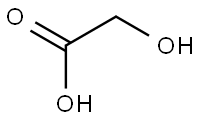
Glycolic acid, CH20HCOOH, also known as hydroxyacetic acid, is composed of colorless deliquescent leaflets that decompose at approximately 78° C (172 OF). It is soluble in water,alcohol,and ether.Glycolic acid is used in dyeing, tanning, electropolishing,and in foodstuffs. It is produced by oxidizing glycol with dilute nitric acid. |
| Uses |
In the processing of textiles, leather, and metals; in pH control, and wherever a cheap organic acid is needed, e.g. in the manufacture of adhesives, in copper brightening, decontamination cleaning, dyeing, electroplating, in pickling, cleaning and chemical milling of metals. |
| Uses |
glycolic acid (hydroxyacetic acid) reduces corenocyte cohesion and corneum layer thickening where an excess buildup of dead skin cells can be associated with many common skin problems, such as acne, dry and severely dry skin, and wrinkles. glycolic acid acts by dissolving the internal cellular cement responsible for abnormal keratinization, facilitating the sloughing of dead skin cells. It also improves skin hydration by enhancing moisture uptake as well as increasing the skin's ability to bind water. This occurs in the cellular cement through an activation of glycolic acid and the skin's own hyaluronic acid content. Hyaluronic acid is known to retain an impressive amount of moisture and this capacity is enhanced by glycolic acid. As a result, the skin's own ability to raise its moisture content is increased. glycolic acid is the simplest alpha hydroxyacid (AHA). It is also the AHA that scientists and formulators believe has greater penetration potential largely due to its smaller molecular weight. It is mildly irritating to the skin and mucous membranes if the formulation contains a high glycolic acid concentration and/ or a low pH. glycolic acid proves beneficial for acne-prone skin as it helps keep pores clear of excess keratinocytes. It is also used for diminishing the signs of age spots, as well as actinic keratosis. However, glycolic acid is most popularly employed in anti-aging cosmetics because of its hydrating, moisturizing, and skin-normalizing abilities, leading to a reduction in the appearance of fine lines and wrinkles. Regardless of the G skin type, glycolic acid use is associated with softer, smoother, healthier, and younger looking skin. glycolic acid is naturally found in sugarcane but synthetic versions are most often used in cosmetic formulations. |
| Definition |
ChEBI: A 2-hydroxy monocarboxylic acid that is acetic acid where the methyl group has been hydroxylated. |
| Preparation |
There are different preparation methods to synthesize glycolic acid. However, the most common method is the catalyzed reaction of formaldehyde with synthesis gas, which costs less. It can be prepared when chloroacetic acid reacts with sodium hydroxide and undergoes re-acidification. Electrolytic reduction of oxalic acid also could synthesize this compound. Glycolic acid can be separated from natural sources like sugarcane, sugar beets, pineapple, cantaloupe, and unripe grapes. It can be prepared by hydrolyzing the cyanohydrin that is derived from formaldehyde. |
| benefits |
Glycolic acid addresses skin issues by exfoliating dead skin cells that accumulate on the surface of the epidermis and contribute to dull, discolored, and uneven looking skin. |
| Flammability and Explosibility |
Non flammable |
| Side effects |
Common side effects of Glycolic acid include dry skin, erythema (skin redness), burning sensation, itching, skin irritation, and skin rash. It can make the skin more sensitive in the sunlight, hence always use sunscreen and protective clothing before you step outdoors. |
| Source |
Glycolic acid is widespread in nature and can be separated from natural sources like sugarcane, sugar beets, pineapple, cantaloupe, and unripe grapes. |
| Purification Methods |
Crystallise it from diethyl ether. [Beilstein 3 IV 571.] |






![2-Propenoic Acid, 2-[2-(ethenyloxy)ethoxy]ethyl Ester](/uploads/41226/small/2-propenoic-acid-2-2-ethenyloxy-ethoxy-ethyl3d579.jpg?size=336x0)


