| Chemical Properties |
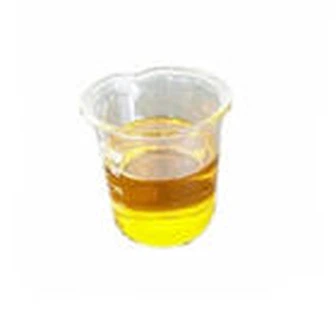
clear colorless to yellow liquid |
| Chemical Properties |
Cuminaldehyde has a strong, pungent, cumin-like odor and similar taste. |
| Occurrence |
Reported in a large number of essential oils, cumin, Acacia farnesiana, cinnamon, bitter orange, Mexican lime, Eucalyptus globulus, rue, boldus, Artemisia hausiliensis and others. Also reported in lemon and mandarin peel oil, cinnamon bark, anise, clove bud, cumin seed, turmeric, parsley, calabash nutmeg (Monodora myristica Dunal), angelica root, thyme, beef, brandy, grape and mastic gum fruit oil. |
| Uses |
Cuminaldehyde is a flavoring agent that is a liquid, colorless to yellow in appearance, with a strong pungent odor resembling cumin oil. It is insoluble in water and soluble in alcohol and ether. It is obtained from cumin oil. It is also termed p-, cumaldehyde, and cuminal. |
| Uses |
Cuminaldehyde has been used to study larvicidal and adulticidal toxicity of monoterpenes against Culex pipiens. It has been used in evaluation of chemical composition, antimicrobial and antioxidant activities of essential oil and various extracts of Eucalyptus gilii. |
| Definition |
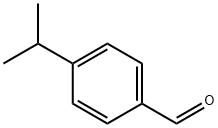
ChEBI: A member of the class of benzaldehydes that is benzaldehyde substituted by an isopropyl group at position 4. It is a component of essential oils from Cumin and exhibits insecticidal activities. |
| Preparation |
From p-isopropylbenzyl chloride and hexamethylenetetramine (Arctander, 1969). |
| Taste threshold values |
Taste characteristics at 10 ppm: spicy with green cumin and herbal nuances. |
| General Description |
Cuminaldehyde is a constituent of cumin oil that exhibits strong antifungal and antibacterial activities. |
| Biochem/physiol Actions |
Cuminaldehyde increases the insulin secretion in streptozotocin-induced diabetic rats. It suppresses melanin formation in cultured murine B16-F10 melanoma cells. |
| Safety Profile |
Moderately toxic by ingestion and skin contact. A skin irritant. Combustible liquid. When heated to decomposition it emits acrid smoke and irritating fumes. See also ALDEHYDES. |
| Synthesis |
Prepared synthetically by heating p-isopropyl benzoyl chloride with an aqueous or alcoholic hexamethylenetetraamine solution. |
| Purification Methods |
A likely impurity is the benzoic acid. Check the IR for the presence of OH from CO2H, and the CO frequencies. If the acid is present, then dissolve the aldehyde in Et2O, wash it with 10% NaHCO3 until effervescence ceases, then with brine, dry over CaCl2, evaporate and distil the residual oil, preferably under vacuum. It is almost insoluble in H2O, but soluble in EtOH and Et2O. The thiosemicarbazone has m 147o after recrystallisation from aqueous EtOH, MeOH or *C6H6. [Crounse J Am Chem Soc 71 1263 1949, Bernstein et al. J Am Chem Soc 73 906 1951, Gensler & Berman J Am Chem Soc 80 4949 1958, Beilstein 7 H 318, 7 II 347, 7 III 1095, 7 IV 723.] |