



Product Introduction
| Allyl glycidyl ether Basic information |
| Description Preparation Uses |
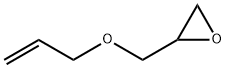
| Product Name: | Allyl glycidyl ether |
| Synonyms: | [(2-propenyloxy)methyl]-oxiran;[(2-Propenyloxy)methyl]oxirane;[(2-Propenyloxy)-methyl]oxirane;[(2-propenyloxy)methyl]-Oxirane;1-(allyloxy)-2,3-epoxy-propan;1-Allilossi-2,3 epossipropano;1-allilossi-2,3epossipropano;1-Allyl-2,3-epoxypropane |
| CAS: | 106-92-3 |
| MF: | C6H10O2 |
| MW: | 114.14 |
| EINECS: | 203-442-4 |
| Product Categories: | Simple 3-Membered Ring Compounds;Oxiranes;Industrial/Fine Chemicals;K00001 |
| Mol File: | 106-92-3.mol |
 |
|
| Allyl glycidyl ether Chemical Properties |
| Melting point | -100 °C |
| Boiling point | 154 °C(lit.) |
| density | 0.962 g/mL at 25 °C(lit.) |
| vapor density | 3.9 (vs air) |
| vapor pressure | 4.7 mm Hg ( 25 °C) |
| refractive index | n20/D 1.433(lit.) |
| Fp | 135 °F |
| storage temp. | Store at <= 20°C. |
| solubility | 50 g/L (20°C) |
| form | Liquid |
| Specific Gravity | 0.962 |
| color | Clear colorless |
| Water Solubility | 50 g/L (20 ºC) |
| BRN | 105871 |
| Henry's Law Constant | (x 10-6 atm?m3/mol): 3.83 at 20 °C (approximate - calculated from water solubility and vapor pressure) |
| Exposure limits | NIOSH REL: TWA 5 ppm (22 mg/m3), STEL 10 ppm (44 mg/m3), IDLH 50 ppm; OSHA PEL: ceiling 10 ppm; ACGIH TLV: TWA 5 ppm, STEL 10 ppm. |
| Stability: | Stable. Combustible. Incompatible with strong oxidizing agents, acids, bases. May form peroxides in storage if in contact with air. |
| InChIKey | LSWYGACWGAICNM-UHFFFAOYSA-N |
| LogP | 0.45 at 25℃ |
| CAS DataBase Reference | 106-92-3(CAS DataBase Reference) |
| NIST Chemistry Reference | Oxirane, [(2-propenyloxy)methyl]-(106-92-3) |
| EPA Substance Registry System | Allyl glycidyl ether (106-92-3) |
| Safety Information |
| Hazard Codes | Xn |
| Risk Statements | 10-20/22-37/38-40-41-43-52/53-62-68 |
| Safety Statements | 24/25-26-36/37/39-61 |
| RIDADR | UN 2219 3/PG 3 |
| WGK Germany | 3 |
| RTECS | RR0875000 |
| Autoignition Temperature | 264 °C |
| TSCA | Yes |
| HazardClass | 3 |
| PackingGroup | III |
| HS Code | 29109000 |
| Hazardous Substances Data | 106-92-3(Hazardous Substances Data) |
| Toxicity | LD50 orally in Rabbit: 922 mg/kg LD50 dermal Rabbit 2550 mg/kg |
| IDLA | 50 ppm |
| Provider | Language |
|---|---|
| Allyl 2,3-epoxypropyl ether | English |
| SigmaAldrich | English |
| ACROS | English |
| ALFA | English |
| Allyl glycidyl ether Usage And Synthesis |
| Description | Allyl glycidyl ether is a colorless liquid clycidyl ether with a pleasant odor. The compound is insoluble in water and less dense than water, therefore can easily float on water. When ingested or inhaled, allyl glycidyl ether is mildly toxic. It is not classified as a human carcinogen. |
| Preparation | In a condensation reaction, epichlorohydrin and allyl alcohol are used in the synthesis of allyl glycidyl ether. |
| Uses | Allyl glycidyl ether is utilized in sealants and adhesives. It is also used in the production of polyvinylcaprolactam. |
| Chemical Properties | colourless liquid |
| Chemical Properties | Allyl glycidyl ether is a stable, colorless, flammable liquid with a pleasant odor. It is incompatible with strong oxidizers agents, acids, and bases. It may form peroxides in storage if in contact with air. |
| Chemical Properties | Allyl glycidyl ether is a colorless liquid with a strong, sweet odor |
| Physical properties | Clear, colorless, watery, combustible liquid with a strong, pleasant odor. An odor threshold value of 47 mg/m3 was reported (quoted, Verschueren, 1983). |
| Uses | Resin intermediate, stabilizer of chlorinated compounds, vinyl resins, and rubber. |
| Uses | Allyl glycidyl ether is a monoglycidyl derivative, used as a reactive epoxy diluent for epoxy resins. As an impurity, it was considered as the sensitizing agent in a plastic industry worker allergic to 3-glycidyloxypropyltrimethoxysilane, an epoxy silane compound used as a fixing additive in silicone and polyurethane. |
| Uses | Reactive diluent in epoxy resin systems; stabilizer of chlorinated compounds; manufacture of rubber |
| Definition | The length of time something has existed. |
| Production Methods | AGE is manufactured through the condensation of allyl alcohol and epichlorohydrin with subsequent dehydrochlorination with caustic to form the epoxy ring. |
| General Description | A colorless liquid with a pleasant odor. Flash point 135°F. Slightly less dense than water and insoluble in water. Hence floats on water. Poisonous by ingestion and mildly toxic by inhalation and skin contact. Very irritating to skin and eyes. Used to make other chemicals. |
| Air & Water Reactions | Flammable. Insoluble in water. |
| Reactivity Profile | Allyl glycidyl ether reacts violently with oxidizing agents. Can form peroxides. Polymerizes readily [Handling Chemicals Safely 1980. p.128]. |
| Hazard | Skin, eye, and upper respiratory tract irri- tant, and dermatitis. Questionable carcinogen. |
| Health Hazard | May cause toxic effects if inhaled or absorbed through skin. Inhalation or contact with material may irritate or burn skin and eyes. Fire will produce irritating, corrosive and/or toxic gases. Vapors may cause dizziness or suffocation. Runoff from fire control or dilution water may cause pollution. |
| Health Hazard | Occupational workers exposed to allyl glycidyl ether develop severe symptoms of poisoning that include, but are not limited to, irritation of the eyes, redness, pain, blurred vision, deep skin burns, respiratory system; causes damage of the mucous membranes, dermatitis, burning sensation, shortness of breath, headache, drowsiness, dullness, nausea, vomiting, pulmonary edema, narcosis, possible hematopoietic and reproductive effects. Acute exposure may cause CNS depression. The major target organs include the eyes, skin, respiratory system, blood, and the reproductive system. |
| Fire Hazard | HIGHLY FLAMMABLE: Will be easily ignited by heat, sparks or flames. Vapors may form explosive mixtures with air. Vapors may travel to source of ignition and flash back. Most vapors are heavier than air. They will spread along ground and collect in low or confined areas (sewers, basements, tanks). Vapor explosion hazard indoors, outdoors or in sewers. Runoff to sewer may create fire or explosion hazard. Containers may explode when heated. Many liquids are lighter than water. |
| Contact allergens | Allyl glycidyl ether is a monoglycidyl derivative, used as a reactive epoxy diluent for epoxy resins. As an impurity, it was considered to be the sensitizing agent in a plastic industry worker allergic to 3-glycidyloxypropyl trimethoxysilane, an epoxy silane compound used as a fixing additive in silicone and polyurethane |
| Safety Profile | Confirmed animal carcinogen. Poison by ingestion. Moderately toxic by inhalation and skin contact. Mutation data reported. A severe skin and eye irritant. Can cause central nervous system depression and pulmonary edema. A flammable liquid when exposed to heat or flame; can react with oxidizing materials. To fight fire, use foam, CO2, dry chemical.When heated to decomposition it emits acrid smoke and irritating fumes. See also ALLYL COMPOUNDS Allyl glycidyl ether has an LD50 of 390 mg/kg (mouse, oral) and an LD50 of 1600 mg/kg (rat, oral). In rabbits, the dermal LD50 is 2550 mg/kg. Inhalational toxicity has been estimated: LC50 = 270 ppm (mice, 4 h) and 670 ppm (rats, 8 h) |
| Potential Exposure | Used as a solvent and emulsifier; making epoxy resins, chlorinated compounds; and rubber. |
| Carcinogenicity | In a 2-year inhalation carcinogenicity study in Osborne Mendel rats and B6C3F1 mice (50 of each sex at each exposure level), animals were exposed to concentrations of 0, 5, or 10 ppm AGE, 6 h/day, 5 days/ week. Although occasional respiratory epithelial tumors were observed, the NTP concluded the data provided only equivocal evidence of carcinogenicity in male rats and female mice. No evidence was obtained to support a carcinogenic effect in female rats. Some evidence was provided for a carcinogenic response in male mice, which included three adenomas of the respiratory epithelium, dysplasia in four mice, and focal basal cell hyperplasia of the respiratory epithelium in the nasal passages of seven mice . |
| Environmental fate | Biological. Bridié et al. (1979) reported BOD and COD values of 0.06 and 1.99 g/g using filtered effluent from a biological sanitary waste treatment plant. These values were determined using a standard dilution method at 20 °C for a period of 5 d. The ThOD for allyl glycidyl ether is 2.11 g/g. Chemical/Physical. Hydrolysis of the epoxide ring is likely forming 1-allyloxy-2,3- dihydroxypropane (Perez and Osterman-Golkar, 2000). |
| storage | Allyl glycidyl ether should be kept stored in a cool, dark, fi reproof area separated from strong oxidants, strong bases, and strong acids. |
| Shipping | UN2219 Allyl glycidal ether, Hazard Class: 3; Labels: 3-Flammable liquid |
| Incompatibilities | May form explosive mixture with air. Contact with acids or bases may cause explosive polymerization. Contact with oxidizers or amines may cause fire and explosions. |
| Waste Disposal | Dissolve or mix the material with a combustible solvent and burn in a chemical incinerator equipped with an afterburner and scrubber. All federal, state, and local environmental regulations must be observed. |
| Precautions | During use and/or handling of allyl glycidyl ether, occupational workers should not be near open flames, sparks, or smoking areas. For temperatures above 48°C, use a closedsystem ventilation and explosion-proof electrical equipment. Workers should use protective gloves, protective clothing, and avoid all contact. |
| Allyl glycidyl ether Preparation Products And Raw materials |
| Preparation Products | Unsaturated polyester resin-->DIGLYCIDYL ETHER-->3-Glycidoxypropyltrimethoxysilane |
Hot Tags: allyl glycidyl ether, China allyl glycidyl ether manufacturers, suppliers, factory, 5 ethyl 1 3 dioxan 5 yl methyl Acrylate, Ethoxylated Bisphenol A Diacrylate, CAS 84170 74 1, Ethoxylated 3 Trimethylolpropane Triacrylate, Tripropylene Glycol Diacrylate, Octadecyl Acrylate
Previous: 2-Ethylhexyl Glycidyl Ether
Next: Cresyl Glycidyl Ether
You Might Also Like
-

Cresyl Glycidyl Ether
-

Industrial Grade 99% CAS 112-73-2 Di-ethylene glycol di-butyl ether/DEDB
-

Factory Supply Ethylene Glycol Di-Acetate/EGDA CAS 111-55-7
-
China Manufacturer Supply CAS 108-65-6 Propylene glycol monomethyl ether acetate/PMA
-

Diethylene Glycol Divinyl Ether (DVE-2) CAS 764-99-8
-

Competitive Price CAS 629-65-2 Di-N-Heptyl Sulfide
Send Inquiry
