


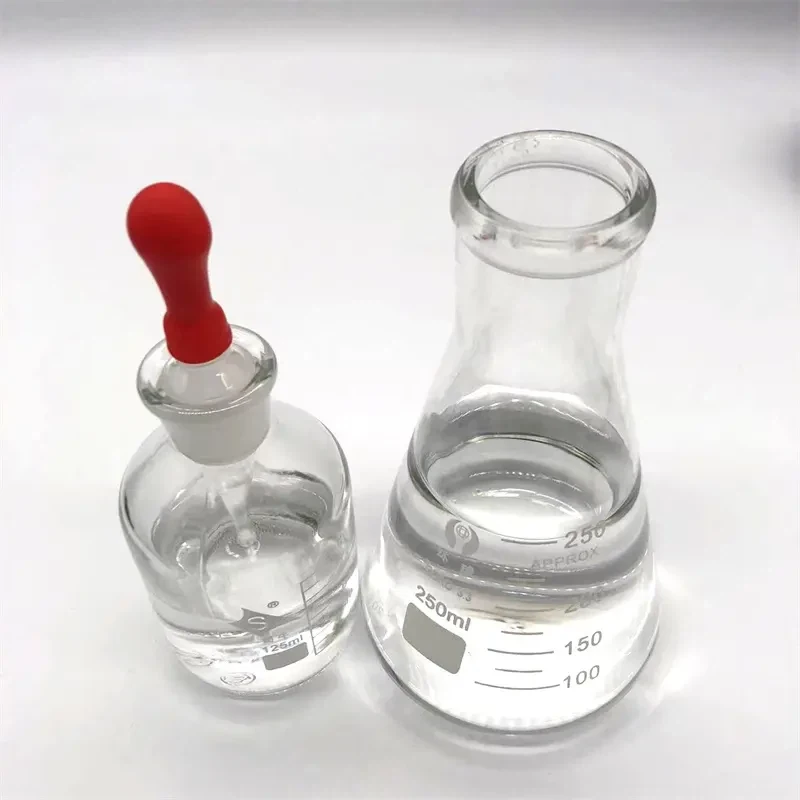
Triethylene Glycol Dimethacrylate
Appearance: Colorless Liquid
MF: C14H22O6
MW: 286
EINECS NO: 203-652-6
Product Introduction
What Is Triethylene Glycol Dimethacrylate
Triethylene glycol dimethacrylate (abbreviated as TEGDMA) is a commonly used chemical that belongs to the acrylate group of organic compounds. It is widely used in resin-based composites as a crosslinker for unsaturated polyester resins (UPRs) to improve their processability, mechanical properties, corrosion resistance, and electronic insulation properties.
Why Choose Us
High quality
Our products are manufactured or executed to very high standards, using the finest materials and manufacturing processes.
Competitive Price
We offering a higher-quality product or service at an equivalent price. As a result we have a growing and loyal customer base.
Rich experience
Our company has many years of production work experience. The concept of customer-oriented and win-win cooperation makes the company more mature and stronger.
Global shipping
Our products support global shipping and the logistics system is complete, so our customers are all over the world.
After-sale service
Professional and thoughtful after -sales team, let you worry about us after -sales Intimate service, strong after -sales team support.
Advanced equipment
A machine, tool or instrument designed with advanced technology and functionality to perform highly specific tasks with greater precision, efficiency and reliability.


Advantages of Triethylene Glycol Dimethacrylate
Low viscosity
TEGDMA has a low viscosity, which makes it easier to handle and apply in various processes. This property is especially useful in applications where a high degree of fluidity is required, such as in coatings, adhesives, and inks.
Good solubility
TEGDMA is soluble in a wide range of solvents, including water, alcohol, and acetone. This solubility property allows it to be used in a variety of applications where it needs to be mixed with other substances.
High reactivity
TEGDMA has a high reactivity, which makes it useful in applications where fast curing or crosslinking is required. This property is especially useful in adhesives, coatings, and composites.
Good stability
TEGDMA has good stability under normal conditions and can resist degradation due to heat, light, and moisture. This stability property makes it useful in applications where long-term storage is required.
Low toxicity
TEGDMA is relatively low in toxicity and has low acute and chronic toxicity. This property makes it useful in applications where human exposure is possible, such as in coatings and adhesives.
Good flexibility
TEGDMA gives good flexibility to the final product, making it suitable for applications that require flexibility, such as non-elastomers and adhesives.
Types of Triethylene Glycol Dimethacrylate
This is the most common type of TEGDMA and is used in a variety of applications, including coatings, adhesives, and inks. It has a low viscosity and good solubility in a wide range of solvents.
This type of TEGDMA is purity higher than standard grade and is used in applications where purity is critical, such as in electronic materials and medical devices. It has low viscosity and good solubility in a wide range of solvents.
This type of TEGDMA has a lower viscosity than standard grade and is used in applications where a high degree of fluidity is required, such as in coatings and adhesives. It has good solubility in a wide range of solvents.
This type of TEGDMA has a higher reactivity than standard grade and is used in applications where fast curing or crosslinking is required, such as in adhesives and composites. It has a low viscosity and good solubility in a wide range of solvents.
This type of TEGDMA is soluble in water and is used in applications where water-based coatings and adhesives are required. It has a low viscosity and good solubility in water.
1. Adhesives
TEGDMA is widely used as a crosslinking agent in adhesives due to its high reactivity and good adhesion properties. It can be used in bonding wood, plastics, metals, and composites.
2. Coatings
TEGDMA can be used as a resin in coatings to improve their adhesion, durability, and chemical resistance. It is commonly used in industrial coatings, automotive coatings, and floor coatings.
3. Dental materials
TEGDMA is used in dental composites and adhesives due to its good biocompatibility and adhesion properties. It is commonly used in dental restorations and prostheses.
4. Polymer synthesis
TEGDMA can be used as a monomer in the synthesis of polymers, such as polyurethanes and epoxies. It can improve the properties of the polymers, such as hardness, stiffness, and durability.
5. Nanomaterials
TEGDMA can be used as a precursor in the synthesis of nanoparticles and nanomaterials. It can be used to functionalize the surface of nanoparticles and improve their dispersion and stability.
6. Bioapplications
TEGDMA has been investigated for its potential use in biomedical applications, such as drug delivery and tissue engineering. Its biocompatibility and degradability make it a promising candidate for these applications.
How to Maintain Triethylene Glycol Dimethacrylate
Store in a cool, dry place: TEGDMA should be stored in a location with low temperature and low humidity to prevent degradation or reaction with other substances. Avoid exposure to direct sunlight or extreme temperature conditions.
Use a sealed container: TEGDMA should be stored in a sealed container to prevent air and moisture from entering. This helps maintain the purity and stability of the chemical.
Avoid contact with incompatible substances: TEGDMA should not come into contact with substances that may react with it or cause a dangerous mixture. Check for compatibility before storing TEGDMA with other chemicals.
Follow safety procedures: When handling and storing TEGDMA, follow safety procedures, including wearing appropriate personal protective equipment (PPE) and following proper handling and storage guidelines.
Regular inspection: Periodically inspect the storage container for any signs of damage, leaks, or contamination. If any issues are detected, take appropriate measures to address them.
How to Choose the Triethylene Glycol Dimethacrylate Correctly
Determine the specific requirements of your application, such as bonding performance, cure time, chemical resistance and flexibility. Different grades and formulations of TEGDMA may have different properties to meet different application needs.
Check the compatibility of TEGDMA with other components in the system such as resins, curing agents and additives. Compatibility is important to ensure a stable and homogeneous mixture.
Consider the viscosity of TEGDMA as it affects handling and application performance. Choose a viscosity that suits your desired application method, whether spraying, coating or injection molding.
Understand the curing conditions required for the TEGDMA you are considering. Factors such as temperature, time, initiators or catalysts may affect the curing process and the final properties of the product.
Look for high-quality TEGDMA from a reputable supplier to ensure consistency and reliability. Check for certification or quality assurance measures to ensure product purity and performance.
Research and choose a supplier with a good reputation within the industry. A reliable supplier will provide technical support, documentation and safety data sheets to help you make an informed choice.
Compare the price and availability of different TEGDMA options. While cost is an important factor, it shouldn't be the only consideration. Balancing quality and performance with cost is critical.
Make sure the TEGDMA you choose complies with relevant regulations and standards applicable to your industry or application. This includes considerations for safety, environmental impact and any regulations specific to your area.
1.Read and understand the safety data sheet
Before using TEGDMA, thoroughly read and understand the safety data sheet provided by the manufacturer. The safety data sheet contains information on the hazards, handling, storage, and emergency procedures associated with the chemical.
2.Wear appropriate personal protective equipment (PPE)
When handling TEGDMA, wear proper PPE, such as gloves, goggles, and a respirator. Choose PPE that is suitable for the tasks being performed and the level of exposure.
3.Work in a well-ventilated area
TEGDMA should be used in a well-ventilated area to prevent the accumulation of vapors. Ensure proper ventilation systems are in place or work outdoors if possible.
4.Avoid contact with skin and eyes
TEGDMA can cause skin irritation and eye damage. Avoid direct contact with the chemical and use proper protective equipment to prevent exposure.
5.Handle with care
TEGDMA is a flammable liquid and should be handled with care to prevent spills and leaks. Store the chemical in a cool, dry place away from sources of heat and flames.
6.Avoid mixing with other chemicals
TEGDMA should not be mixed with other chemicals without proper knowledge and precautions. Mixing chemicals can potentially lead to dangerous reactions or release of harmful substances.
7.Dispose of waste properly
Waste containing TEGDMA should be dispose of in accordance with local regulations and guidelines. Do not dispose of waste in regular trash or pour it down the drain.
8.Keep out of reach of children and pets
TEGDMA should be stored in a secure location out of reach of children and pets. Label the container clearly with appropriate warnings.
9.Train personnel
Ensure that all personnel handling TEGDMA are trained on proper handling procedures, safety precautions, and emergency response measures.
10.Follow local regulations
Comply with local regulations and safety standards regarding the use, storage, and disposal of chemicals. Adhere to the recommendations and requirements provided by regulatory authorities.
How Is Triethylene Glycol Dimethacrylate Synthesized
Ethylene glycol dimethacrylate (EGDMA) synthesis
Ethylene glycol and methacrylic acid are reacted in the presence of a catalyst to form ethylene glycol dimethacrylate. This reaction typically involves heating and stirring the reactants to promote the chemical bonding between the ethylene glycol and methacrylic acid molecules.
Trimerization reaction
The purified EGDMA is then subjected to a trimerization reaction, where three EGDMA molecules react with each other to form TEGDMA. This reaction can be facilitated by the addition of a catalyst or initiator.

Purification and isolation
The resulting EGDMA mixture may require purification and isolation steps to remove any impurities or unreacted substances. This can involve techniques such as distillation, crystallization, or chromatography.
Purification and isolation
Similar to the EGDMA synthesis, the TEGDMA product may require further purification and isolation steps to ensure the desired purity and remove any remaining impurities.
What Are the Trends and Development Directions of Triethylene Glycol Dimethacrylate in the Market
Advanced applications: TEGDMA is finding increasing applications in advanced technologies such as 3D printing, bioinks, and dental composites. Its adhesion properties and crosslinking capabilities make it suitable for these emerging fields.
Green chemistry: There is a growing trend towards sustainable and environmentally friendly chemicals. Manufacturers are focusing on developing more sustainable synthesis methods and reducing the environmental impact of TEGDMA production.
Customization: With the diverse needs of different industries, there is a trend towards customized TEGDMA formulations. Manufacturers are developing specialized grades and blends to meet specific performance requirements.
Nanotechnology: Nanotechnology is emerging as a promising area, and TEGDMA may find applications in nanocomposites and nanostructured materials. Nanotechnology can enhance the properties and performance of TEGDMA-based products.
Collaboration and partnerships: Collaboration between academia, industry, and research institutions is becoming more common. This can lead to innovations in TEGDMA synthesis, applications, and market development.
International market: The global market for TEGDMA is expanding, with increasing demand from Asia, Europe, and North America. International collaborations and trade are likely to drive the market growth.

Yes, Triethylene Glycol Dimethacrylate (TEGDMA) can be used in 3D printing processes, particularly in the field of dental 3D printing. TEGDMA is a monomer that can undergo polymerization when exposed to UV or visible light. This property makes it suitable for use in photopolymerization-based 3D printing techniques.In dental 3D printing, TEGDMA is often formulated into printable resins or photopolymerizable inks. These formulations typically contain TEGDMA along with other components such as photoinitiators, additives, and fillers. The resin is loaded into a 3D printer, and the desired object is created by selectively curing the resin layer by layer using UV or visible light.TEGDMA-based resins offer several advantages in dental 3D printing. Firstly, TEGDMA has a low viscosity, which allows for easy flow and filling of intricate details in the printed object. This is particularly important in dental applications where precise and accurate reproduction of dental structures is required.
How to Improve the Stability of Triethylene Glycol Dimethacrylate
1.Storage conditions
Store TEGDMA in a cool, dry place protected from direct sunlight. High temperatures and humidity can accelerate the degradation of the resin.
Purification: Purify TEGDMA before use to remove impurities that may contribute to instability. Common purification methods include distillation, filtration, and crystallization.
2.Inhibition
Add stabilizers or inhibitors to TEGDMA to slow down the degradation process. Examples of stabilizers include antioxidants, ultraviolet absorbers, and hindered amine light stabilizers (HALS).
3.Mixing with other polymers
Blending TEGDMA with other polymers can improve its stability. Polymer blends can enhance the mechanical properties and resistance to degradation of the resin.
4.Reduced exposure to light and oxygen
TEGDMA is sensitive to light and oxygen, which can accelerate its degradation. Minimize the exposure of TEGDMA to light and oxygen during storage and processing.
5.Controlled curing conditions
The curing process of TEGDMA affects its stability. Excessive heat or prolonged curing times can lead to increased degradation. Adhere to the recommended curing conditions provided by the resin manufacturer.
6.Testing and quality control
Regularly test the stability of TEGDMA to ensure it meets the desired specifications. This can include tests such as viscosity measurement, gel time determination, and residual analysis.
7.Package and handling
Use proper packaging materials to protect TEGDMA from physical damage and contamination. Handle TEGDMA carefully to avoid exposure to air, moisture, and other substances that may cause degradation.
8.Shelf life management
Pay attention to the shelf life of TEGDMA and use it within the recommended time frame. Expired or aged resin may have reduced stability.
9.Consult experts
If you have specific stability concerns or require more information, consult experts in the field or the resin manufacturer for guidance and advice.
Our Factory
Suzhou Senfeida Chemical Co., Ltd. was established in 2013 and is an enterprise dedicated to the production and research and development of various chemical raw materials. In order to improve production efficiency and meet customer needs, the company established a warehousing and processing plant in Changzhou, Jiangsu in 2014. Subsequently, in order to better expand the market and serve customers, the company established a contract factory in Yueyang, Hunan in 2015.In addition, in order to meet the needs of customers in different regions, the company has also established multiple contract factories in Guangdong, Shandong and other places. Through these measures, Suzhou Senfeida Chemical Co., Ltd. can better provide customers with high-quality chemical raw material products.


FAQ
Q: What is Triethylene Glycol Dimethacrylate (TEGDMA)?
Q: What are the advantages of using TEGDMA?
Q: How is TEGDMA synthesized?
Q: What is the molecular structure of TEGDMA?
Q: Can TEGDMA be polymerized?
Q: What are the applications of TEGDMA in dentistry?
Q: Is TEGDMA biocompatible?
Q: Can TEGDMA be used in 3D printing?
Q: What are the factors that affect the polymerization of TEGDMA?
Q: Can TEGDMA be used as a diluent in dental composites?
Q: What are the potential health concerns associated with TEGDMA?
Q: Can TEGDMA be used in other industries besides dentistry?
Q: How can the polymerization shrinkage of TEGDMA-based materials be minimized?
Q: Can TEGDMA-based materials be bonded to tooth structure?
Q: What are the factors that affect the mechanical properties of TEGDMA-based materials?
Q: Can TEGDMA-based materials be used for direct restorations?
Q: How can the polymerization rate of TEGDMA be controlled?
Q: Can TEGDMA-based materials be used for indirect restorations?
Q: What are the potential challenges associated with using TEGDMA in dental materials?
Q: Can TEGDMA-based materials be repaired if damaged?
Hot Tags: triethylene glycol dimethacrylate, China triethylene glycol dimethacrylate manufacturers, suppliers, factory, Propoxylated Trimethylolpropane Triacrylate, CAS 7328 17 8, Tri-functional, Dodecyl 2 methylacrylate, CAS 3290 92 4, Dodecyl Acrylate
You Might Also Like


Send Inquiry
